


What happens when Wall Street leadership meets Japan’s digital business revolution? Hiroshi Mikitani and James Gorman represent two different paths to business success. Mikitani transformed Rakuten into a global digital ecosystem, while Gorman led Morgan Stanley through major strategic changes.
Their careers highlight the power of innovation, financial expertise, and long-term planning. Although their professional worlds intersect through a documented corporate transaction, their individual achievements tell two distinct leadership stories.
Quick Bio: James Gorman and Hiroshi Mikitani
| Detail | James Gorman | Hiroshi Mikitani |
| Nationality | Australian born American business executive | Japanese entrepreneur |
| Best known for | Leading Morgan Stanley | Founding Rakuten |
| Education | University of Melbourne and Columbia Business School | Hitotsubashi University and Harvard Business School |
| Major company | Morgan Stanley | Rakuten Group |
| Leadership focus | Financial services and corporate governance | E commerce, technology, and digital services |
Who Is James Gorman?

James Gorman is a prominent business executive best known for his leadership at Morgan Stanley, one of the world’s major financial services firms. He became the company’s CEO in 2010 and served as chairman from 2012 through 2023. He later became executive chairman during 2024 and chairman emeritus in January 2025. He is also chairman of The Walt Disney Company’s board.
Also Read: Satya Nadella and Michel Vounatsos: The Verified Link (2026)
Early Life, Education, and Professional Background
Gorman was born in Australia and studied at the University of Melbourne, where he earned arts and law degrees. He later completed an MBA at Columbia Business School in the United States.
Before entering senior financial leadership, Gorman worked as a lawyer in Melbourne and became a senior partner at McKinsey & Company. He subsequently held executive positions at Merrill Lynch before joining Morgan Stanley in 2006.
His experience in consulting, financial services, and business strategy helped prepare him for leadership at a major global investment bank.
James Gorman’s Career at Morgan Stanley
Gorman joined Morgan Stanley in February 2006 and became co-president in December 2007. He took over as CEO in January 2010, during a period when financial institutions were still responding to the effects of the global financial crisis.
During his tenure, Morgan Stanley strengthened its wealth management business and developed a broader revenue model that combined investment banking, institutional securities, and wealth management. This strategic direction helped the firm expand its role beyond traditional investment banking.
His leadership also emphasized financial resilience, client relationships, and a more diversified business. These priorities were important because investment banking revenue can fluctuate with market conditions, while wealth management can provide a different source of income.
Gorman stepped down as CEO at the end of 2023. His transition marked the conclusion of a long period at the top of Morgan Stanley and reflected the importance of succession planning within large financial institutions.
Major Acquisitions and Business Strategy Under Gorman
One important part of Gorman’s leadership was strengthening Morgan Stanley’s wealth management operations. The firm acquired Smith Barney in a major transaction with Citigroup, helping establish a larger wealth management platform. Morgan Stanley also acquired E*TRADE Financial in 2020, expanding its digital brokerage capabilities and reach among individual investors.
The E*TRADE acquisition was particularly significant because it connected Morgan Stanley’s established advisory business with a technology-driven platform serving self-directed investors. It reflected a broader industry shift toward digital access, integrated financial services, and stronger customer relationships.
These strategic moves helped Morgan Stanley broaden its business mix. However, corporate performance depends on many factors, including market conditions, execution, regulation, and competition, rather than the actions of one executive alone.
James Gorman’s Transition From CEO to Board Leadership
Gorman’s departure from the CEO role was followed by a planned leadership transition. Ted Pick became Morgan Stanley’s CEO in January 2024. Gorman served as executive chairman during 2024 and became chairman emeritus in January 2025. He no longer serves as the firm’s active chairman.
The transition is an example of how a large company can separate leadership responsibilities and prepare the next generation of executives. A planned succession can help preserve strategic continuity while giving a new CEO room to establish their own approach.
James Gorman’s Role at The Walt Disney Company
Gorman became chairman of The Walt Disney Company’s board on January 2, 2025. His background in financial services and executive succession gives him relevant experience for board oversight at a major entertainment company.
A board chairman does not perform the same job as a company’s CEO. The chairperson helps lead the board’s governance responsibilities, while the CEO manages day-to-day operations and executes the company’s strategy. Gorman’s Disney role therefore represents corporate oversight rather than direct management of Disney’s films, parks, or streaming services.
Who Is Hiroshi Mikitani?
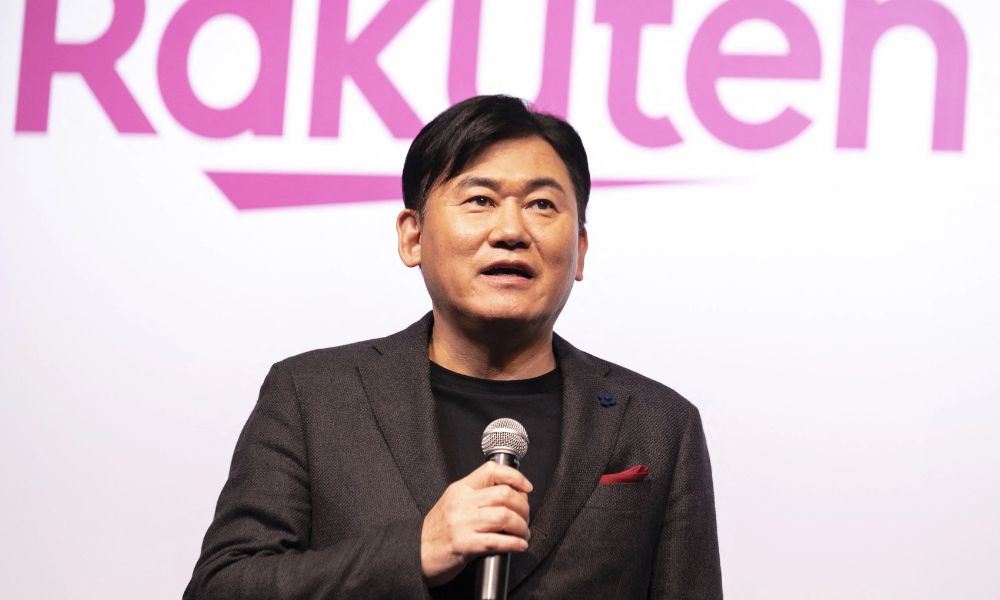
Hiroshi Mikitani is a Japanese entrepreneur and the founder of Rakuten Group. He is widely known for building an online marketplace into a broader business ecosystem covering e-commerce, financial technology, digital content, communications, and mobile services.
Rakuten’s official management information lists Mikitani as its representative director, chairman, president, and CEO as of April 2026.
Must Read: Travis Kalanick and Helen Mirren: Are They Connected? (2026)
Early Life, Education, and Banking Career
Mikitani was born in Kobe, Japan, on March 11, 1965. He studied at Hitotsubashi University and joined the Industrial Bank of Japan in April 1988. After gaining experience in finance, he earned an MBA from Harvard Business School in May 1993.
His banking experience gave him exposure to business finance and corporate decision-making. His later move into entrepreneurship combined that financial background with an interest in using the internet to change how businesses reached customers.
Founding Rakuten and Building an Online Marketplace
Mikitani founded Rakuten in February 1997, and Rakuten Ichiba launched in May of the same year. The marketplace offered merchants an online channel to present and sell products to consumers.
Rather than relying only on a conventional retail model, Rakuten developed a platform that allowed businesses to participate in a wider online marketplace. This approach helped smaller merchants reach customers through the internet and gave consumers access to a broader range of products.
Over time, Rakuten developed a recognizable ecosystem and loyalty approach that encouraged customers to use multiple services within the group. The company became publicly listed in 2000 and expanded beyond its original Japanese marketplace.
Expanding Rakuten Beyond E-Commerce
Rakuten gradually expanded into financial services, travel, digital content, communications, and other technology-related businesses. This diversification created opportunities for customers to interact with several services within the same ecosystem.
For example, a customer might shop through Rakuten’s marketplace, use a financial product offered by a group company, and earn or redeem loyalty points across eligible services. The broader strategy aims to strengthen customer engagement and encourage repeat use.
However, operating across multiple industries also creates challenges. Each business faces its own competitors, regulatory requirements, investment needs, and profitability pressures. An ecosystem strategy can create advantages, but it requires careful management of costs and execution.
Rakuten Mobile, Fintech, and International Expansion
Rakuten entered Japan’s mobile carrier market in 2019. This move was ambitious because telecommunications infrastructure requires significant investment, and established operators already had substantial customer bases.
Rakuten Mobile became a key part of Mikitani’s broader ecosystem strategy. Mobile services can connect customers with the group’s other products, although building a competitive network also requires continued investment and operational improvements.
Rakuten’s financial technology businesses and international operations add further dimensions to its growth strategy. Its performance therefore depends not only on e-commerce but also on how successfully it manages mobile services, financial products, and other digital businesses.
Hiroshi Mikitani’s Leadership Style and Business Philosophy
Mikitani’s business philosophy emphasizes innovation, entrepreneurship, and the belief that companies can actively shape the future. Rakuten describes optimism as a practical commitment to making improvements through present-day actions, rather than simply expecting conditions to get better.
His leadership is associated with experimentation and expansion into new markets. That approach can create growth opportunities, but it also involves financial and operational risks. Rakuten’s mobile business illustrates both sides: expansion into a new industry can strengthen the overall ecosystem, yet it requires substantial investment before a business becomes sustainable.
Mikitani’s Current Leadership Roles and Business Priorities
As of April 2026, Mikitani continues to lead Rakuten Group as chairman, president, and CEO. The company has identified stronger connections between Rakuten Mobile and its wider ecosystem, greater use of artificial intelligence, and employee development as priorities for fiscal 2026.
These priorities show how Rakuten is trying to improve efficiency while continuing to grow its digital services. The key challenge is balancing innovation and expansion with consistent financial performance.
What Connects James Gorman and Hiroshi Mikitani?
The Documented Rakuten and Morgan Stanley Connection
The clearest documented connection between the two business figures involves Rakuten and Morgan Stanley at the institutional level.
In January 2024, Rakuten announced cash tender offers for certain US dollar senior notes maturing in 2024. Morgan Stanley & Co. LLC was listed among the dealer managers handling the offers, alongside Goldman Sachs, Daiwa Capital Markets America, and Mizuho Securities USA. Rakuten subsequently announced the results and final settlement of those offers.
A tender offer allows a company to offer to buy back certain outstanding securities from investors under specified terms. Such transactions can form part of a company’s debt management and financing strategy.
The 2024 Rakuten Debt Tender Offers Explained
Rakuten’s tender offers concern specific debt securities. Morgan Stanley’s role as a dealer manager was a professional financial services role associated with the transaction.
This establishes a business connection between Rakuten and Morgan Stanley. It does not, by itself, prove that Gorman personally managed the transaction or directly negotiated with Mikitani. Corporate announcements identify the firms involved, not necessarily every individual who participated in the work.
Read Also: Millie Bobby Brown and Safra Catz: Real Link or Myth? (2026)
What Is Verified About Their Relationship, and What Is Not?
The available official records support an institutional connection between the companies. They do not establish that Gorman and Mikitani are close friends, relatives, personal business partners, or joint investors.
This distinction matters because articles about prominent executives can sometimes turn a corporate link into a claim about a personal relationship without sufficient evidence. A reliable account should separate documented facts from speculation.
James Gorman vs. Hiroshi Mikitani: Key Differences
Founder-Led Entrepreneurship vs. Corporate Executive Leadership
Mikitani founded Rakuten and developed it over decades. His role has involved creating a business vision, entering new industries, and building an ecosystem around the original marketplace.
Gorman, in contrast, joined an established financial institution and rose through executive leadership. His work focused on strategic transformation, acquisitions, financial services, and corporate governance.
Technology and E-commerce vs. Financial Services
Mikitani’s main business focus has been digital commerce and related technology services. His company operates across several consumer and business markets.
Gorman’s core expertise lies in financial services, particularly investment banking and wealth management. His later Disney board role demonstrates a shift toward governance at another large corporation.
Business Growth, Acquisitions, and Strategic Transformation
Both executives have used strategic expansion to strengthen their organizations, but their circumstances differ. Mikitani built new businesses within an expanding group, while Gorman helped Morgan Stanley broaden its capabilities through acquisitions and business diversification.
Their careers show that growth strategies need to fit a company’s industry, resources, and competitive position. A strategy suitable for a digital marketplace may not work in a regulated financial institution.
Their Career Achievements and Professional Legacies
Mikitani’s most notable achievement is building Rakuten from a Japanese online marketplace into a diversified international group. Gorman’s legacy is closely associated with Morgan Stanley’s strategic transformation and the growth of its wealth management operations.
Neither career should be judged solely by company size or revenue. Leadership also involves managing risks, developing teams, making difficult investment decisions, and preparing organizations for future challenges.
Business Lessons From James Gorman and Hiroshi Mikitani
Their careers offer several practical lessons for business owners and aspiring leaders.
1. Build a Long-Term Strategy
Mikitani expanded Rakuten beyond its original marketplace, while Gorman helped diversify Morgan Stanley’s business. Both examples demonstrate the value of thinking beyond immediate results.
2. Adapt to Changing Industries
Digital commerce, telecommunications, and financial services continue to evolve. Businesses need to respond to changing customer expectations, technology, and competition.
3. Turn Innovation Into Practical Value
New ideas matter when they solve customer problems or improve business performance. Innovation should be linked to clear goals rather than novelty alone.
4. Make Acquisitions and Investments Strategically
Acquisitions can add capabilities and customers, but they also carry integration risks. Leaders need to evaluate costs, strategic fit, and long-term value before committing resources.
5. Build Strong Teams
Large organizations cannot depend on one leader for every decision. Effective delegation, accountability, and capable management teams help companies execute complex strategies.
6. Plan Leadership Succession Carefully
Gorman’s transition at Morgan Stanley illustrates why leadership changes should be prepared in advance. A clear succession process can reduce uncertainty and support continuity.
7. Measure Success Beyond Revenue
Revenue growth is important, but it does not tell the whole story. Profitability, debt management, customer loyalty, sustainable investment, and long-term resilience also matter.
Also Read This: Wayne Gretzky And Larry Culp: Are They Connected? Facts 2026
James Gorman and Hiroshi Mikitani’s Net Worth
Hiroshi Mikitani’s Estimated Net Worth and Rakuten Shareholding
Mikitani’s wealth is closely linked to his ownership stake and leadership position at Rakuten, alongside any other assets and investments. However, personal net worth estimates can change with share prices, private assets, debt, and other financial factors.
Rakuten’s financial disclosures are more useful for understanding the company’s performance than for establishing a precise current personal net worth figure. Without a reliable, up-to-date source, a specific amount should not be presented as confirmed.
James Gorman’s Wealth, Compensation, and Public Disclosures
Gorman’s financial position is associated with his executive career and compensation from Morgan Stanley. However, annual compensation is not the same as total personal net worth. Compensation may include salary, bonuses, and equity awards, while net worth also depends on assets, investments, and liabilities.
Readers should therefore treat online net worth figures cautiously unless they are supported by credible reporting or relevant public disclosures.
Recent Developments and Current Business Positions
As of October 2026, Mikitani remains listed as Rakuten Group’s representative director, chairman, president, and CEO. Rakuten’s fiscal 2025 results, released in February 2026, reported revenue of approximately ¥2.50 trillion, up 9.5% year over year. The company also reported ¥14.4 billion in IFRS operating income and a net loss attributable to owners of approximately ¥177.9 billion. Rakuten Mobile achieved full-year EBITDA profitability for the first time since entering the mobile carrier business.
Gorman’s current public roles include chairman of Disney’s board and chairman emeritus of Morgan Stanley. His career has moved from direct executive management toward board leadership and corporate oversight.
Conclusion
Hiroshi Mikitani and James Gorman demonstrate two distinct approaches to business leadership. Mikitani built Rakuten through entrepreneurship and digital expansion, while Gorman reshaped Morgan Stanley through strategic leadership and financial expertise.
Their careers offer useful lessons in innovation, adaptability, and succession planning. Their companies have a documented business connection, but claims about a personal partnership require evidence.
FAQ’s
Are James Gorman and Hiroshi Mikitani Business Partners?
There is a documented institutional connection between their companies through Morgan Stanley’s role in Rakuten’s 2024 debt tender offers. Available official records do not establish a personal business partnership between Gorman and Mikitani.
Have James Gorman and Hiroshi Mikitani Worked Together?
The documented transaction connects Rakuten and Morgan Stanley, but public records cited here do not confirm that the two executives personally worked together on it.
What Is the Connection Between Rakuten and Morgan Stanley?
Morgan Stanley & Co. LLC acted as a dealer manager in Rakuten’s 2024 cash tender offers for certain US dollar senior notes.
What Is Hiroshi Mikitani Best Known For?
Mikitani is best known for founding Rakuten in 1997 and expanding it into a digital ecosystem spanning e-commerce, fintech, communications, and other services.
What Is James Gorman Best Known For?
Gorman is best known for leading Morgan Stanley as CEO from 2010 through 2023 and helping strengthen its wealth management business. He is also chairman of Disney’s board.
What Are James Gorman and Hiroshi Mikitani’s Net Worths?
Exact current figures should not be treated as confirmed without reliable, current evidence. Public compensation data, company shareholdings, and personal net worth are different measures.
